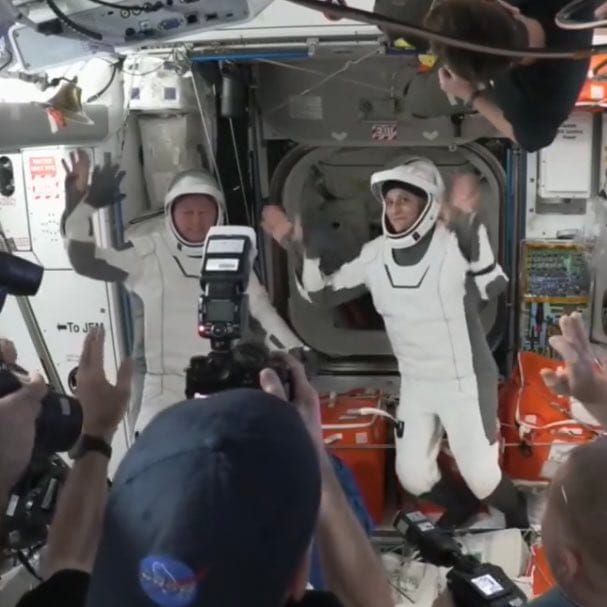
NASA astronauts Butch Wilmore and Suni Williams have made their long-awaited return to Earth after spending nearly nine months in space. Their journey back was nothing short of spectacular, marked by a fiery re-entry through Earth’s atmosphere and a safe splashdown off the coast of Florida. This marks the end of a mission that was originally scheduled for just eight days, but was dramatically extended due to technical issues with the spacecraft that carried them to the International Space Station (ISS).
A Thrilling Journey Home
The astronauts’ journey home was filled with excitement. As their SpaceX capsule re-entered Earth’s atmosphere, it encountered fiery temperatures, but four parachutes were deployed to ensure a gentle and safe splashdown into the ocean. Interestingly, a pod of dolphins was seen circling the craft, adding an unexpected yet beautiful moment to the mission’s conclusion.
Once the recovery ship lifted the capsule from the water, Butch, Suni, and their fellow crew members—astronaut Nick Hague and cosmonaut Aleksandr Gorbunov—were helped out of the hatch. They were greeted with smiles and waves, showing just how happy they were to be back on solid ground.
Steve Stich, the manager of NASA’s Commercial Crew Program, expressed his excitement at the news conference, stating, “The crew’s doing great,” highlighting the successful return of the astronauts.
A Mission That Lasted Longer Than Expected
The mission that brought Butch and Suni back to Earth was initially supposed to last just eight days. However, their journey took an unexpected turn after the spacecraft they had used to travel to the ISS—Boeing’s Starliner—encountered several technical difficulties. The Starliner spacecraft had to be sent back to Earth empty in September 2024, which meant that Butch and Suni needed another ride home.
NASA opted to use the next scheduled flight, which was a SpaceX capsule designed for a six-month mission. Due to the flexibility in seat arrangements, Butch and Suni were able to return home with the new crew. As a result, their stay in space was extended, and they had to adapt to a longer-than-planned mission in the ISS.
Despite the unexpected extension, both astronauts embraced the extra time in space. They conducted numerous experiments on the ISS, carried out spacewalks, and contributed significantly to research. Notably, Suni Williams broke the record for the most hours spent outside the space station by a woman.
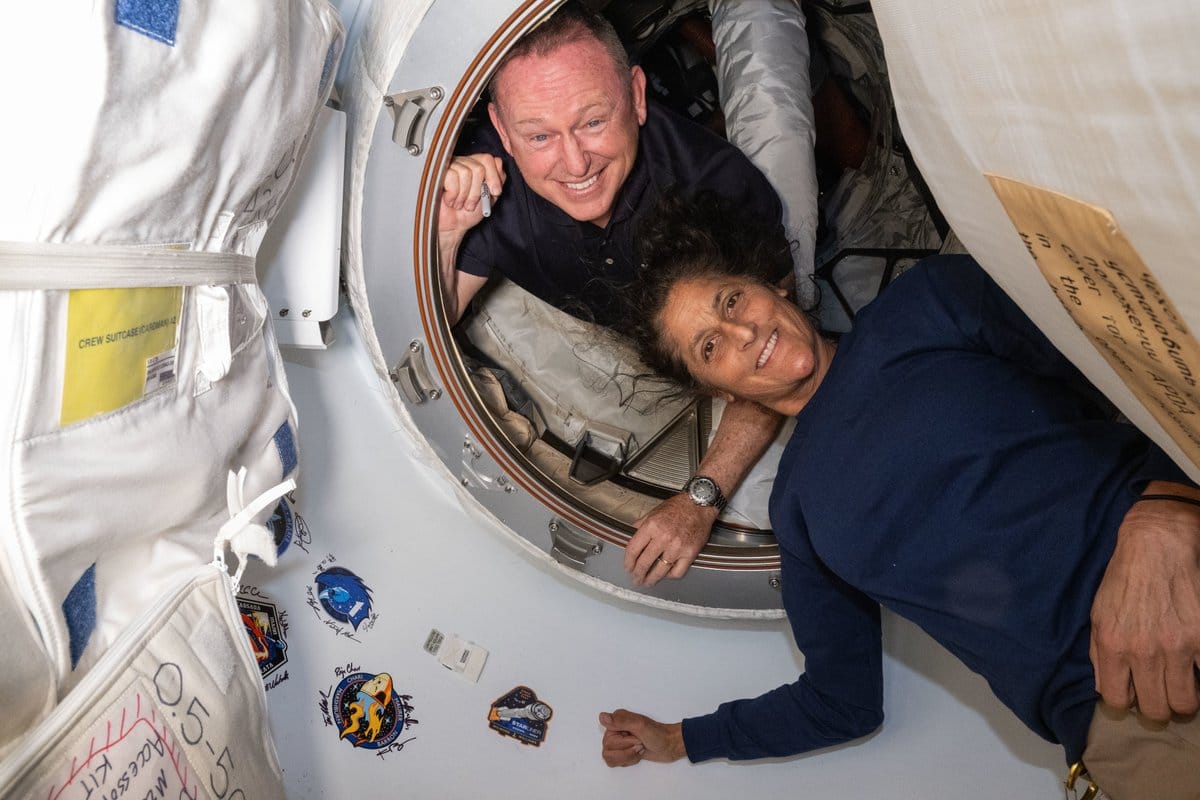
A Heartwarming Homecoming
The astronauts’ return to Earth brought with it an emotional sense of relief and joy. After nine months in space, they were excited to reconnect with their families and friends. Helen Sharman, Britain’s first astronaut, shared her thoughts on the emotional impact of the astronauts’ return, saying, “All of those family celebrations, the birthdays and the other events that they thought they were going to be part of—now, suddenly they can perhaps catch up on a bit of lost time.”
Butch and Suni had originally planned to spend Christmas at home with their loved ones, but due to the extended mission, they celebrated in space. The astronauts and their fellow crew members dressed in Santa hats and reindeer antlers, sending a festive message to their families and the world.
Despite being away for much longer than expected, the astronauts never truly felt “stranded.” There were always spacecraft attached to the ISS to ensure the crew could return home safely in case of an emergency. Their resilience and adaptability during the extended mission earned them praise from NASA officials, including Joel Montalbano, deputy associate administrator for NASA’s Space Operations Mission Directorate. He stated, “It is awesome to have Crew 9 home, just a beautiful landing.”
The Challenges of Long-Duration Space Missions
But the journey back to Earth was not without its challenges. Extended stays in space can take a toll on an astronaut’s body. Prolonged exposure to weightlessness causes muscle atrophy, loss of bone density, and changes in blood circulation. The absence of gravity also affects fluid distribution, which can lead to temporary changes in eyesight.
After spending months in space, Butch and Suni were carefully helped onto stretchers upon landing—a standard procedure after long missions. They will undergo medical checks and physical assessments to ensure they recover from the effects of their prolonged stay in space. The astronauts will also begin an extensive exercise regimen to help their bodies readjust to gravity.
British astronaut Tim Peake, who spent six months aboard the ISS, shared his experience of readjusting to Earth’s gravity. He explained, “Your body feels great, it feels like a holiday. But you must keep up the exercise regime. Because you’re staying fit in space, not for space itself, but for when you return back to the punishing gravity environment of Earth. A person must withstand tremendous difficulty during their initial two or three days after returning to Earth.
Looking Forward to Family Reunions
Both Butch and Suni have mentioned in interviews that while they were well-prepared for the extended stay in space, they were looking forward to returning to Earth and reuniting with their families. Suni Williams spoke about her excitement in an interview with CBS, saying, “I’m looking forward to seeing my family, my dogs, and jumping in the ocean. That will be really nice—to be back on Earth and feel Earth.”
For the astronauts, their return marks not only the end of a mission but the start of a long-awaited reunion with loved ones. After months of living in a confined space and adapting to the harsh conditions of space, nothing compares to the joy of being back home on Earth.
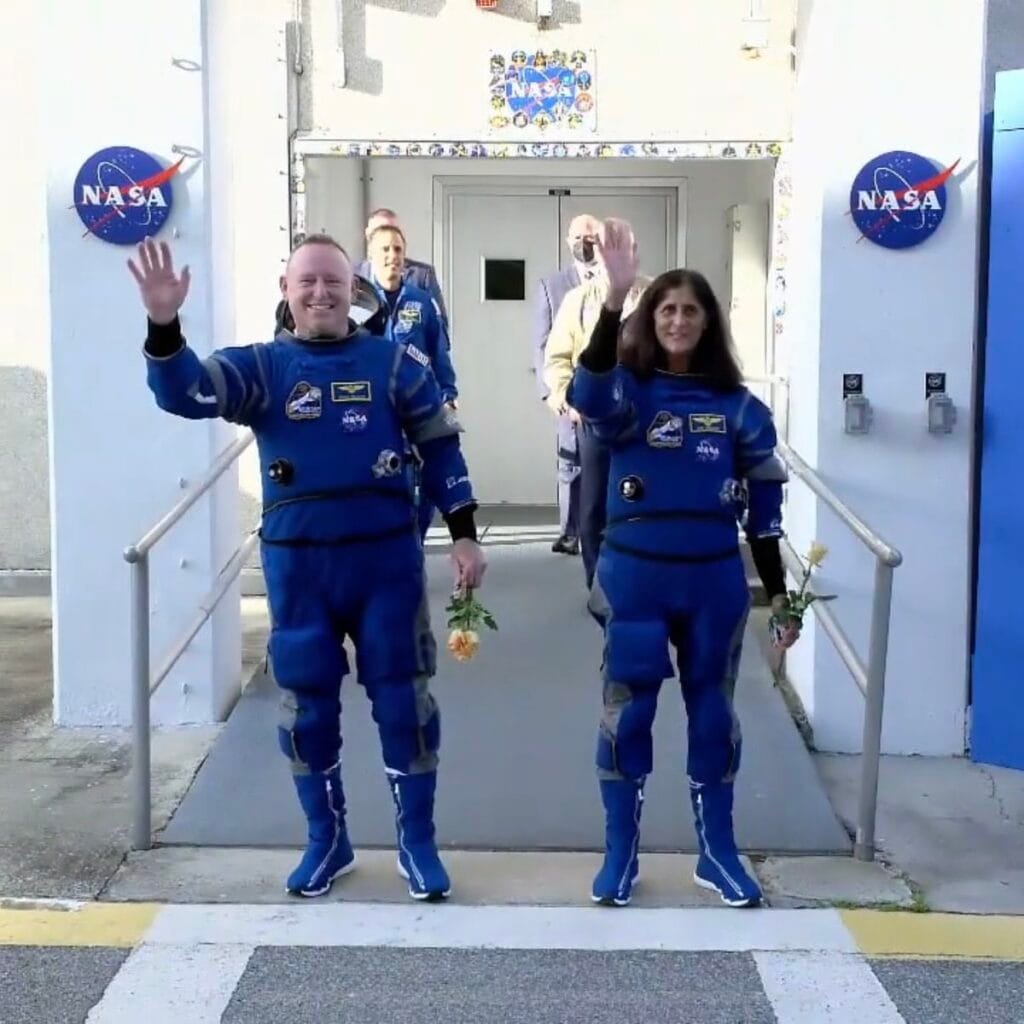
The Future of Space Exploration
The successful return of Butch and Suni underscores the importance of international collaboration in space exploration. While their mission was filled with unexpected challenges, the partnership between NASA and private aerospace companies like SpaceX has proven to be invaluable. Their ability to quickly adapt to changing circumstances and find solutions highlights the resilience of the astronauts and the evolving capabilities of space travel.
As humanity continues to explore the frontiers of space, the experiences of astronauts like Butch and Suni will provide valuable insights into the effects of long-duration space travel on the human body. Their journey is not only a testament to their resilience but also a stepping stone toward more ambitious missions, including potential missions to Mars and beyond.