They’re playing politics with my little boy’: One Mom’s Struggle After Education Department Cuts
When Rebecca, a 48-year-old mother from Michigan, turned to the U.S. Department of Education for help, she never imagined politics would block her path.
Her 13-year-old adopted son lives with fetal alcohol syndrome, ADHD, and other mental health issues. He needs special education and support, but instead of help, the school district isolated him. For months, he had almost no contact with peers—just a few teachers in a one-on-one setting. At one point, he was only allowed two hours at school each day.
Rebecca filed a formal complaint in October 2024 with the Department of Education’s Office for Civil Rights (OCR), saying the school district denied her son a fair education. A lawyer from OCR’s Cleveland office was working on her case, and mediation was planned.
Education Department Cuts Leave Families in Limbo
In March 2025, the Trump administration cut half of the Education Department’s staff using a process called “reduction in force.” The Cleveland OCR office—handling Rebecca’s case—was completely shut down.
“I don’t have any other option for this kid,” Rebecca said. “They’re playing politics with my little boy.”
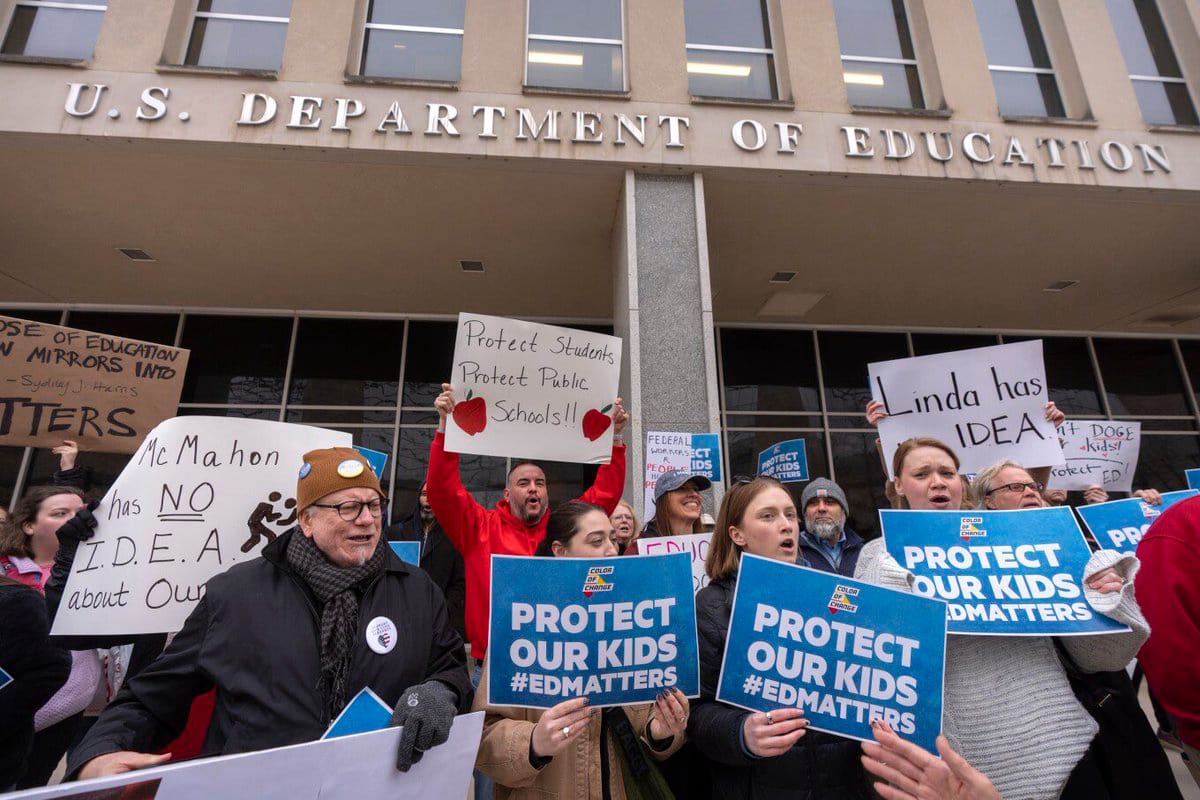
The cuts are part of a bigger move. On March 20, President Trump signed an executive order to begin dismantling the Department of Education. While Congress must approve such a move, the intent is clear: shrink the department, remove oversight, and limit its role to things like student loans.
What Is the Office for Civil Rights?
The OCR helps protect students from discrimination based on race, disability, sex, or religion. It ensures schools follow civil rights laws. The office investigates complaints, like Rebecca’s, and helps create solutions—from providing tutoring to fixing accessibility issues.
In 2024, the OCR received over 22,000 complaints. But staff numbers had dropped from 1,100 in 1981 to just 588. With new cuts, only five regional offices remain. Others in major cities—like New York, Chicago, and San Francisco—have been closed.
Lawyers and advocates say the workload is now impossible to manage.
Thousands of Cases Now Stuck
Parents and attorneys across the country are seeing their cases stall. One Cleveland attorney called the shutdown “a complete feeling of desperation.” Without OCR, many families have nowhere else to turn for justice.
Rebecca’s son’s case has been transferred to the Denver office, but she’s received no updates. The uncertainty is taking a toll.
“He was treated so poorly and differently because of the way his brain was structured,” she said. “I want to see somebody held accountable.”
Parents and Advocates Fight Back
Some families are pushing back. In Alabama, Nikki Carter—a mother and disability advocate—has joined a lawsuit against the Department of Education. Her own racial discrimination complaint has gone unanswered since 2022.
“We do need OCR to go back to work,” she said. “And we also need OCR to be accountable.”
The lawsuit aims not just to restore OCR but to fix the delays and lack of communication that have plagued the office for years.
Why This Matters
The Department of Education may not control daily school operations, but it plays a key role in enforcing civil rights in education. Without OCR, students with disabilities, racial minorities, and other vulnerable groups could lose the only federal protection they have.
Rebecca has moved her son to a different school for students with emotional impairments. But she’s still waiting for help—still hoping someone will listen.