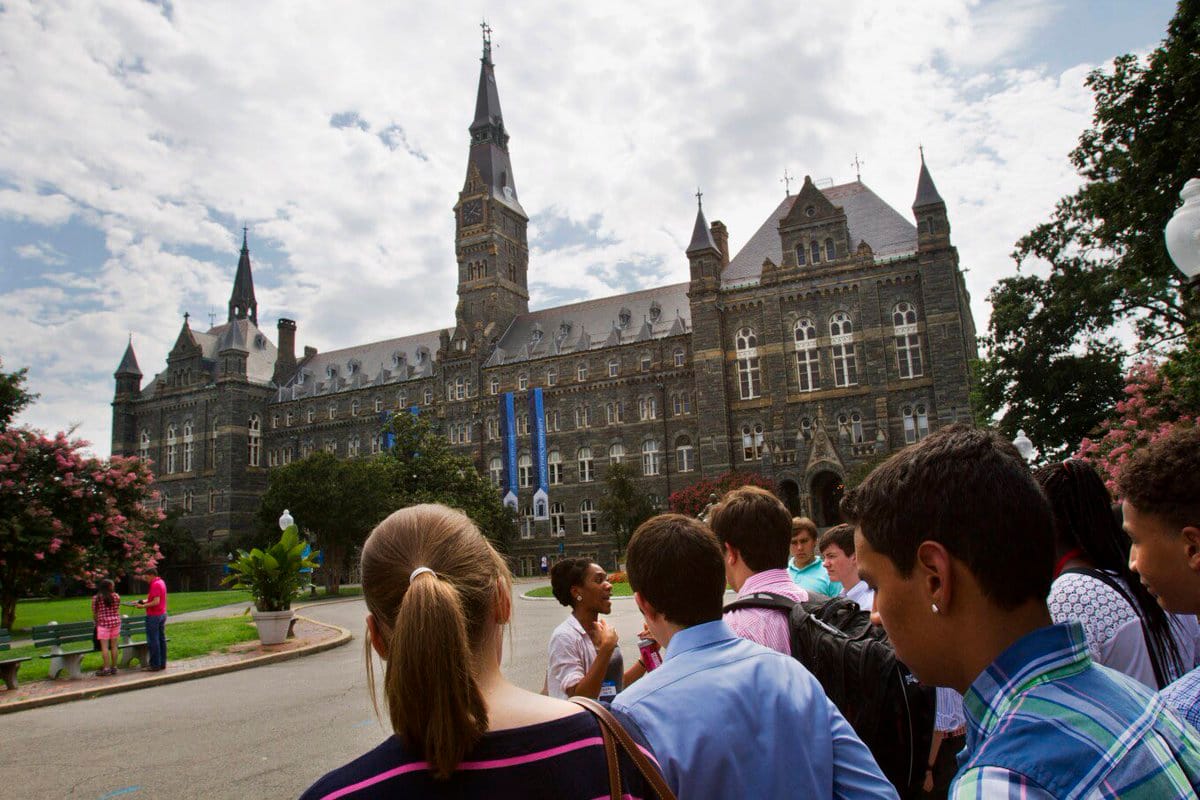
A U.S. court has recently blocked the deportation of Badar Khan Suri, a Georgetown University researcher, after he was detained by immigration authorities. This case has sparked considerable debate, particularly surrounding the allegations against him. Suri, an Indian national, is a postdoctoral fellow at Georgetown University, conducting research and teaching under a student visa. He is accused by the U.S. Department of Homeland Security (DHS) of spreading Hamas propaganda and having links to a suspected terrorist.
The legal and social implications of this case are profound, as it highlights tensions surrounding academic freedom, immigration policies, and the complexities of U.S. foreign relations. Below, we dive into the details of the case, the arguments presented in court, and the broader context of similar incidents affecting foreign students and academics in the U.S.
The Allegations and Detention
Badar Khan Suri was arrested on March 17, 2025, outside his home in northern Virginia by masked immigration agents, according to legal documents obtained by CBS News. The agents identified themselves as part of DHS and informed Suri that his visa had been revoked, leading to his imminent deportation. He was taken to the Alexandria Staging Facility in Louisiana, where he remains detained. The arrest came after the DHS accused Suri of “spreading Hamas propaganda” and having “close connections to a known or suspected terrorist.”
Suri’s lawyer vehemently denies these allegations. In a court filing, they argued that Suri was being unfairly targeted due to his wife’s Palestinian identity and her constitutionally protected right to free speech. His wife, Mapheze Saleh, who is a U.S. citizen, has publicly stated that this detention has deeply disrupted their family life, particularly the emotional well-being of their three children, who are in desperate need of their father.
Georgetown University’s Response
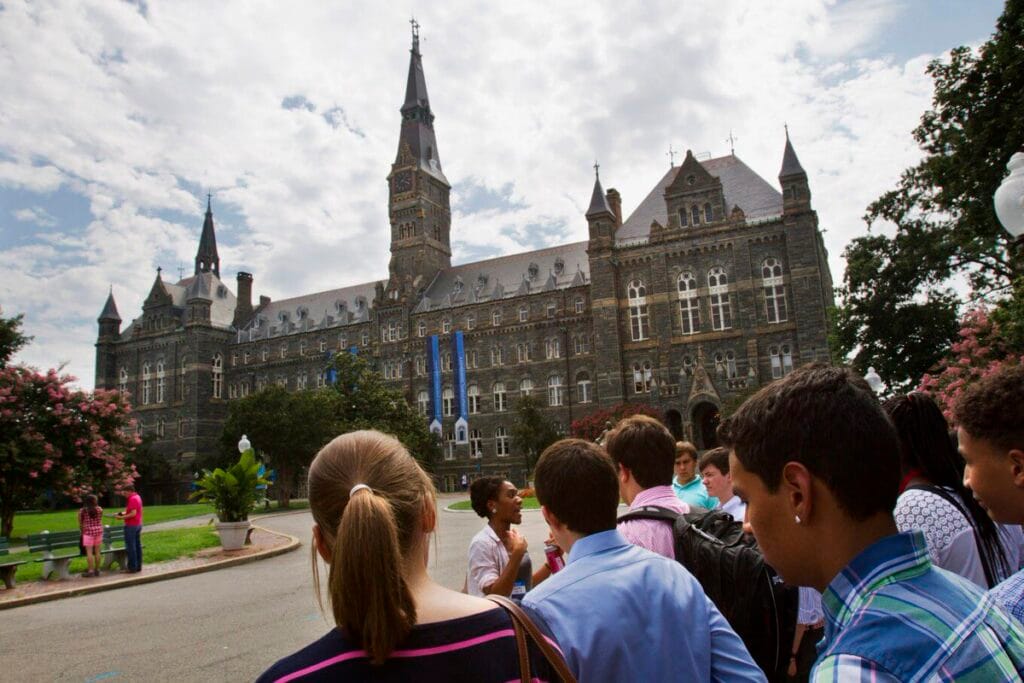
Georgetown University, where Suri has been a researcher, has also voiced strong support for him. In a statement to the media, the university emphasized that Suri was granted a visa to enter the U.S. for his research on peacebuilding in conflict regions like Iraq and Afghanistan. The institution has also made it clear that they have not seen evidence of any illegal activities on Suri’s part.
“We support our community members’ rights to free and open inquiry, deliberation, and debate,” a university spokesperson stated, underscoring their commitment to academic freedom. “Even if the underlying ideas may be difficult, controversial, or objectionable, we expect the legal system to adjudicate this case fairly.”
Court’s Temporary Block on Deportation
On March 20, 2025, Judge Patricia Tolliver Giles issued an order temporarily blocking the deportation of Suri, stating that he “shall not be removed from the United States unless and until the Court issues a contrary order.” This ruling has given Suri’s legal team a critical opportunity to challenge the claims against him and prevent his expulsion from the U.S.
His wife, Mapheze Saleh, has passionately argued in a sworn statement that the arrest has destabilized their family. “Our children are in desperate need of their father and miss him dearly,” she said in her court statement, expressing the emotional toll of the detention. “As a mother of three children, I desperately need his support to take care of them and me.”
The Broader Context: Foreign Students and Academic Freedom
Suri’s case is not isolated. It is part of a larger pattern of increasing scrutiny faced by foreign students and academics, particularly those with ties to politically sensitive regions. Recent incidents involving other scholars and activists have raised concerns about the U.S. government’s treatment of international scholars and its implications for academic freedom.

For example, Mahmoud Khalil, a graduate from Columbia University, was detained after participating in pro-Palestinian protests on campus. Similarly, Leqaa Kordia, a Palestinian student at Columbia, was arrested for overstaying her student visa, and Ranjani Srinivasan, a student at the same university, had her visa revoked after attending several protests and sharing social media posts related to Palestinians in Gaza.
In another high-profile case, Rasha Alawieh, a Lebanese kidney transplant specialist at Brown University, was deported after arriving at Boston airport. U.S. immigration officials found photos and videos on her phone that they considered sympathetic to Hezbollah, a group designated as a terrorist organization by the U.S.
These cases highlight the ongoing tension between national security concerns and the protection of free speech and academic freedom, particularly when it comes to politically charged issues.
The Accusations Against Suri
The U.S. government’s accusations against Suri have centered around his supposed ties to Hamas, a Palestinian militant group classified as a terrorist organization by the U.S. and other Western countries. DHS spokesperson Tricia McLaughlin stated that Suri was “actively spreading Hamas propaganda and promoting antisemitism on social media” and alleged that he had close connections to a senior Hamas advisor.
Suri’s father-in-law, however, is a former political adviser to the late Hamas leader Ismail Haniyeh. His wife, Mapheze Saleh, explained in her court statement that her father had been involved in the Palestinian political sphere for many years, though he had distanced himself from Hamas by 2010. Despite his history, Saleh insisted that her father’s past should not be used to target her husband.
The Legal and Political Ramifications
The detention of Suri, and others like him, underscores the ongoing debate over immigration policies and academic freedom in the U.S. Critics argue that actions like these could have a chilling effect on the ability of foreign scholars to engage in free research and expression. They fear that political ideologies, particularly those related to the Middle East, are being weaponized to intimidate academics.
In contrast, supporters of the government’s stance contend that national security should take precedence in cases where individuals are suspected of engaging with groups linked to terrorism. However, the lack of transparency in these cases—such as the vague accusations against Suri—raises important questions about the fairness and legality of these deportations.