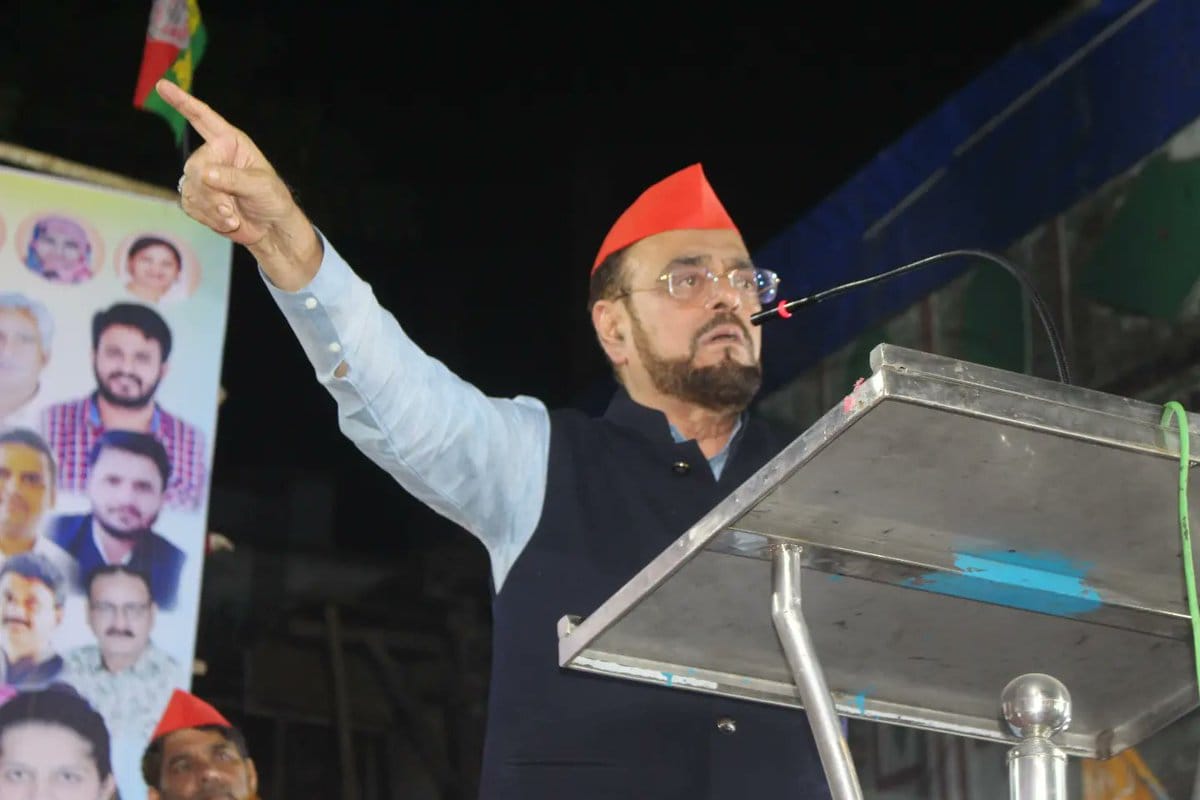
MUMBAI: Tensions escalated in the Maharashtra legislature on Tuesday as Samajwadi Party (SP) MLA Abu Asim Azmi’s controversial remarks praising Mughal emperor Aurangzeb triggered a fierce political debate, bringing both Houses of the state assembly to a standstill. The incident took place shortly after the resignation of food and civil supplies minister Dhananjay Munde, intensifying the political turmoil in the state.
Azmi’s remarks about Aurangzeb, which were reportedly made during an interview, sparked outrage across political lines. The MLA, representing Mankhurd Shivaji Nagar, described the Mughal emperor not only as a “cruel ruler” but also as a “great administrator” who had built temples and expanded the empire’s borders to include present-day Afghanistan and Myanmar. Furthermore, Azmi controversially asserted that the battle between Chhatrapati Sambhaji Maharaj and Aurangzeb was primarily political and not religious, adding fuel to the fire.
Heated Debate and Political Fallout
As soon as the Maharashtra Legislative Assembly reconvened on Tuesday, the BJP and Shiv Sena (Shinde faction) launched sharp attacks against Azmi, calling for his suspension from the House and accusing him of insulting Maharashtra’s revered icons. Eknath Shinde, the Deputy Chief Minister and Shiv Sena (Shinde faction) leader, labeled Azmi a “traitor,” emphasizing that he had no right to sit in the Assembly. Shinde also accused Azmi of constantly insulting the memory of Chhatrapati Shivaji Maharaj and his son, Chhatrapati Sambhaji Maharaj, both of whom are deeply respected in Maharashtra’s history.
Aaditya Thackeray, the leader of the Shiv Sena (UBT), echoed similar sentiments, claiming that Azmi was being used by the BJP as a “puppet” whenever the party faced trouble. Thackeray also linked Azmi’s controversial comments to the resignation of Dhananjay Munde, suggesting that the issue was being deliberately highlighted to divert attention from the minister’s exit. Thackeray insisted that not only should Azmi face action, but former Maharashtra Governor BS Koshyari should also be held accountable for similar insults to state icons.

Opposition’s Defence and Clarification from Azmi
While the ruling coalition parties mounted their attack on Azmi, the opposition contended that the issue was being politically exploited. They argued that the controversy surrounding the remarks was intentionally created to distract the public from Munde’s resignation, which had dominated the news cycle earlier that day.
In his defense, Abu Asim Azmi issued a statement claiming that his comments about Aurangzeb had been taken out of context. He clarified that he had merely quoted historical sources, stating that he had not intended to disrespect Chhatrapati Shivaji Maharaj, Sambhaji Maharaj, or any other historical figure. Azmi further expressed regret if his words had inadvertently hurt any religious sentiments and retracted his statements in the interest of peace.
The SP MLA also criticized the political drama unfolding in the assembly, calling it a disservice to the people of Maharashtra. “This issue is being turned into a political matter,” Azmi stated, “and the closure of the assembly’s budget session over this is detrimental to the public.” He further emphasized that he had no intention to insult any of the state’s revered icons, including Dr. B. R. Ambedkar and Mahatma Jyotiba Phule, and had always held them in high regard.
FIRs and Legal Actions
The controversy did not stay confined to the legislative halls. In the wake of the uproar, FIRs were filed against Azmi by the Wagle Estate and Naupada police stations in Thane for allegedly hurting religious sentiments and defaming the reputation of public figures. The legal action followed accusations that Azmi’s remarks violated the law under the Bombay Police Act (BNS), which prohibits the defamation of religious and cultural symbols.
The Politics of History and Polarization
The debate surrounding the remarks of Abu Asim Azmi highlights the continued polarizing effect of historical narratives on contemporary politics. The eulogizing of Aurangzeb, a figure whose legacy remains highly controversial in Indian history, has sparked a wider debate over historical interpretation and political appropriation. While some view Azmi’s comments as an honest reflection of historical events, others argue that the glorification of a ruler who is often associated with religious intolerance only deepens existing societal divisions.
This incident is the latest in a series of political battles that hinge on the interpretation of history, particularly concerning the legacy of the Mughal Empire and Maratha warriors like Chhatrapati Shivaji Maharaj. The ongoing dispute highlights the volatile intersection of history, religion, and politics in Maharashtra, where emotions run high over perceived insults to local icons.