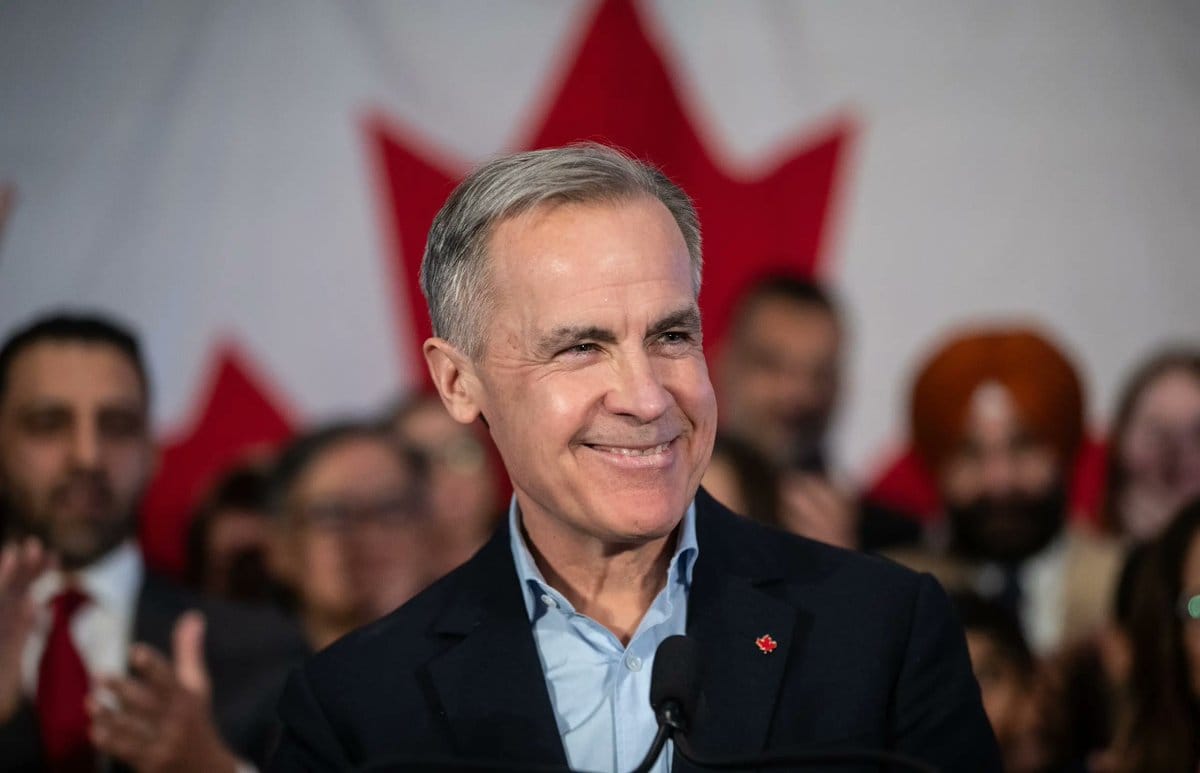
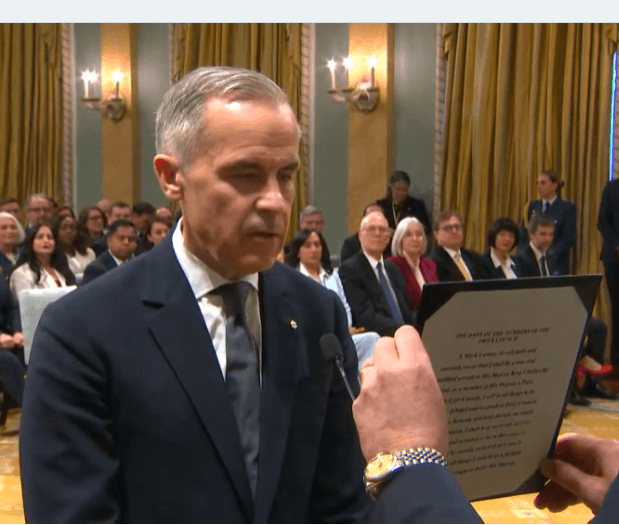
Mark Carney, an economist and former central banker, is set to be sworn in as Canada’s 24th prime minister on Friday. His appointment follows a decisive victory in the Liberal Party leadership race, succeeding outgoing Prime Minister Justin Trudeau after nine years in power.
Carney’s Experience in Economic Leadership
Carney is best known for his tenure as governor of both the Bank of Canada and the Bank of England, where he played a crucial role in stabilizing financial markets during major economic disruptions. His expertise in handling economic crises is expected to be an asset as he takes office amid ongoing trade tensions with the United States.
Challenges with U.S. Trade Relations
Carney’s early days in office are likely to be dominated by the escalating trade war with U.S. President Donald Trump. The U.S. has imposed 25% tariffs on Canadian goods not covered by the Canada-United States-Mexico Agreement (CUSMA). In response, Carney has vowed to uphold Canada’s reciprocal tariffs on select American products until the U.S. removes its restrictions.
In his victory speech, Carney made his stance clear: “We can’t let him succeed. Until the Americans show us respect, we will maintain our tariffs on U.S. imports.”
Economists warn that if Trump fully enforces these tariffs, Canada could face a significant economic slowdown, increasing the likelihood of a recession.
Potential Early Federal Election
Although Canada’s next federal election is scheduled for October, speculation is mounting that Carney may call an early vote. He is expected to position himself as the best candidate to challenge Trump’s trade policies while rallying Canadian voters around economic resilience and national unity.
His main opponent in the upcoming election will be Conservative leader Pierre Poilievre, whose political approach has drawn comparisons to Trump. Initially leading in polls by as much as 20 points, Poilievre’s support has seen a decline amid concerns over U.S.-Canada trade tensions.
A Competitive Political Landscape
The Liberal Party will face strong competition not only from the Conservatives but also from the Bloc Québécois and the New Democratic Party (NDP). With 120 seats, the Conservatives remain the official opposition, while the Bloc Québécois holds 33 seats and the NDP has 24.