
A new federal task force, created by President Donald Trump, aims to combat rising antisemitism on U.S. college campuses. One of the primary focuses of the initiative is Columbia University, which could lose over $50 million in federal contracts due to its alleged “ongoing inaction” regarding the harassment of Jewish students. Three federal agencies outlined the task force’s mission in a joint news release on Monday.
This move is part of a broader, ongoing issue of antisemitism at universities across the United States. Columbia University, in particular, has been embroiled in controversy following a series of incidents connected to the Israel-Hamas war. Despite the university’s assurances that it is committed to fighting antisemitism and discrimination, federal authorities have raised concerns about the institution’s handling of the issue.
Background: A History of Antisemitism on Campus
Antisemitism has been a persistent problem at colleges nationwide, with incidents spiking during times of political unrest, such as the Israel-Hamas conflict. At Columbia, these tensions have resulted in a wave of protests, violent clashes, and the disruption of academic activities. The situation escalated when several pro-Palestinian demonstrators targeted Jewish students and faculty members, making it difficult for Jewish students to feel safe and supported.
Health and Human Services Secretary Robert F. Kennedy Jr. emphasized the deadly impact of antisemitism, comparing it to “history’s most deadly plagues.” He also condemned what he referred to as “woke cancel culture” for enabling an environment where these harmful ideologies can thrive unchecked.
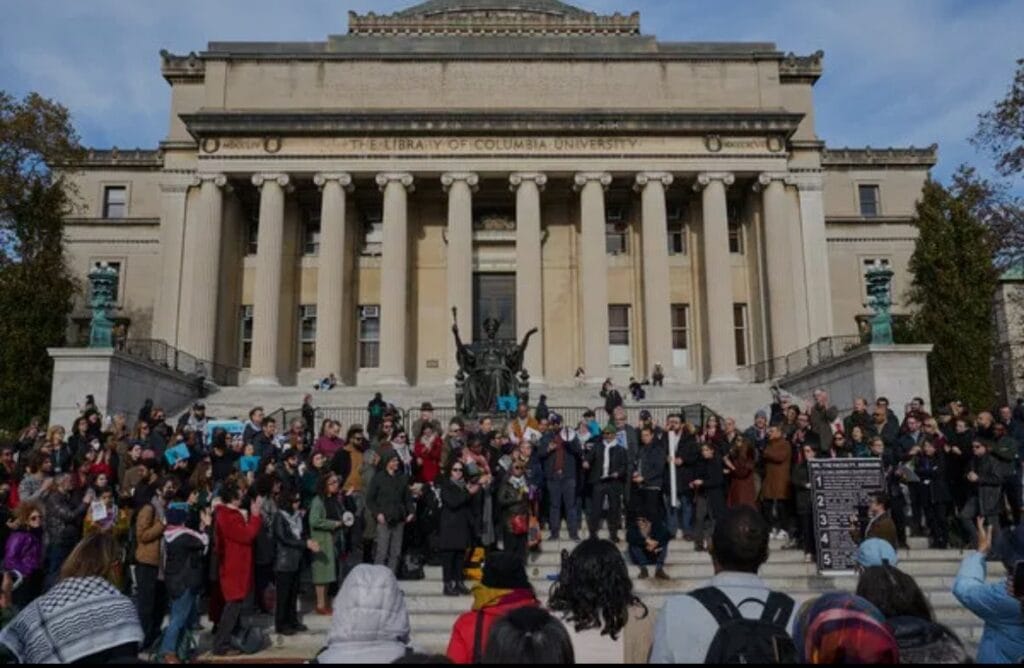
Columbia’s Response to the Task Force
In response to the federal task force’s scrutiny, Columbia University expressed its commitment to combatting antisemitism and any form of discrimination. The university assured the public that it would cooperate with the new federal administration in tackling the problem while prioritizing the safety and well-being of its students, faculty, and staff.
However, despite these reassurances, Columbia now faces a federal review of over $5 billion in grant commitments to ensure compliance with civil rights regulations. The review is being led by the General Services Administration, which has raised concerns over the university’s responsibility to protect students from discrimination under federal law.
Secretary of Education Linda McMahon stressed that institutions receiving federal funding are legally obligated to safeguard students from all forms of discrimination, including antisemitism. McMahon questioned whether Columbia University is fit to continue doing business with the federal government if it fails to uphold these obligations.
The Resignation of University Leadership
The scrutiny on Columbia reached its peak with the resignation of Minouche Shafik, the university’s president, in August. Her departure followed a tumultuous year marked by student protests, building occupations, and mass arrests. Additionally, three deans resigned after being implicated in a scandal involving antisemitic text messages. Shafik had faced criticism for her handling of protests surrounding the Israel-Hamas war and her controversial testimony before Congress on the issue.
Antisemitism in U.S. Colleges: The ADL’s Report
The Anti-Defamation League (ADL) released its latest report on antisemitism at U.S. colleges, providing a snapshot of how institutions are addressing the issue. The report revealed that while some universities have made progress in combating antisemitism, Jewish students still do not feel safe or included on many campuses. Columbia University received a grade of “D” for its handling of antisemitism, unchanged from the previous year.
The ADL’s report highlighted that 45% of schools showed improvement in combating antisemitism, while only 9% showed a decline. However, the overall picture remains concerning, with 10% of schools receiving an “F” grade.
Campus Clashes and Protests
In addition to the government’s actions, campus protests continue to disrupt university activities. At Columbia, a January protest during a History of Modern Israel class was met with confrontations between demonstrators and students. Protesters distributed anti-Israel flyers featuring violent imagery, further escalating tensions on campus.
Just last week, a group of pro-Palestinian demonstrators occupied a building at Barnard College, an affiliate of Columbia University. The demonstration, organized by Columbia University Apartheid Divest, demanded the reinstatement of two students expelled for disrupting an Israeli history course earlier in the year.
Columbia University condemned the disruption, emphasizing its commitment to maintaining a safe and productive learning environment. The university remains focused on supporting its community as it navigates these ongoing challenges.
The Road Ahead for Columbia
As the federal task force continues to monitor Columbia University and other institutions, it’s clear that addressing antisemitism on campuses will remain a high-priority issue. The future of federal funding for Columbia depends on how effectively it can implement policies to protect Jewish students and create a campus environment free from discrimination.
While Columbia’s response so far has been to reaffirm its commitment to diversity and inclusion, only time will tell whether these efforts will be enough to meet the expectations of the federal government and the broader public.