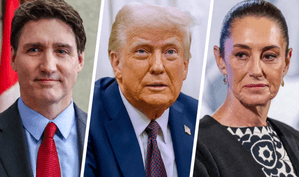
In a move that has significant trade implications, President Donald Trump announced Thursday that he is temporarily pausing the 25% tariffs on Mexico and Canada that had been set to take effect earlier this week. The tariffs, which had raised concerns among businesses and consumers, will be delayed until April, providing both countries some relief while negotiations continue.
Background of the Tariffs and Their Impact
The tariffs, part of a broader economic strategy under the U.S.-Mexico-Canada Agreement (USMCA), had sparked tensions between the United States and its neighbors to the north and south. Canada, in particular, had warned of retaliatory measures, including the potential removal of U.S.-made alcohol from liquor shelves across the country. This move could have hurt American businesses, especially those in the distilled spirits industry.
Chris Swonger, the president and CEO of the Distilled Spirits Council of the U.S. and Responsibility.org, voiced his concerns about the potential fallout, stating, “Totally unfortunate and really over the top.” Swonger emphasized that while Americans have a strong preference for U.S.-made alcohol, they also value international spirits like tequila and Canadian whisky. “You can only make tequila in Mexico, and you can only make Canadian whisky in Canada,” he added.
Trade Numbers: The Impact on U.S. Imports
The U.S. imports significant quantities of alcoholic beverages from Canada and Mexico, which would have been heavily impacted by the tariffs. In 2024 alone, the U.S. imported over $5 billion worth of tequila from Mexico and more than $600 million worth of Canadian spirits. The tariff delay aims to prevent potential disruptions in this market.
Swonger, representing the spirits industry, expressed relief at the pause, noting that a trade war could have led to “significant export declines” of American distilled spirits products to Canada and Mexico. These two nations are considered among the U.S.’s largest trading partners for spirits, and any long-term tariff increase could have harmed the industry’s growth.
Trump’s Announcement and Strategic Considerations
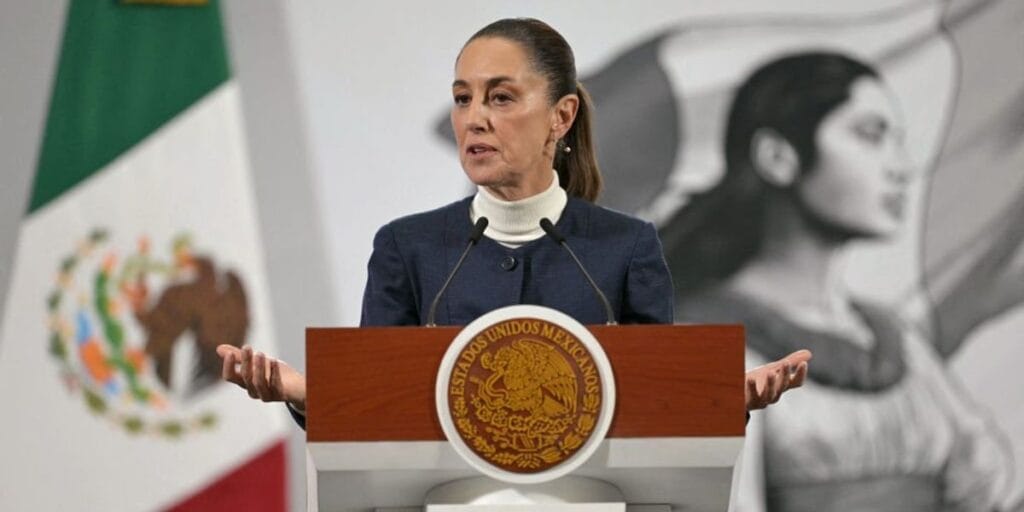
President Trump took to Truth Social to announce his decision, stating, “I did this as an accommodation and out of respect for President Sheinbaum.” His comment reflects ongoing diplomatic efforts with Mexico’s leadership, who are working with the U.S. to address critical issues such as the flow of fentanyl and illegal immigration. Trump’s decision also signals a step toward stronger cooperation between the U.S. and Mexico on securing borders and protecting American families, as emphasized by Rep. Joe Wilson (R-S.C.).
The Role of Tariffs in U.S. Politics
The decision to delay the tariffs also underscores the role of tariffs as a key tool in U.S. trade policy. Some Republican lawmakers, such as Congressman Troy Nehls (R-Texas), have supported the use of tariffs as a negotiation tactic, believing that they ensure fairness in trade practices. Tariffs are often seen as a way to level the playing field, especially when a country feels that its interests are being undermined by unfair trade policies.
What’s Next?
The delay gives both the U.S. and its trading partners time to work out further agreements before the tariffs are potentially reimposed in April. During this period, businesses, particularly those in the alcohol industry, will be closely monitoring developments to gauge the impact on their operations. The next few months will likely determine whether a permanent resolution can be reached or if tariffs will become a recurring feature of trade negotiations with Mexico and Canada.