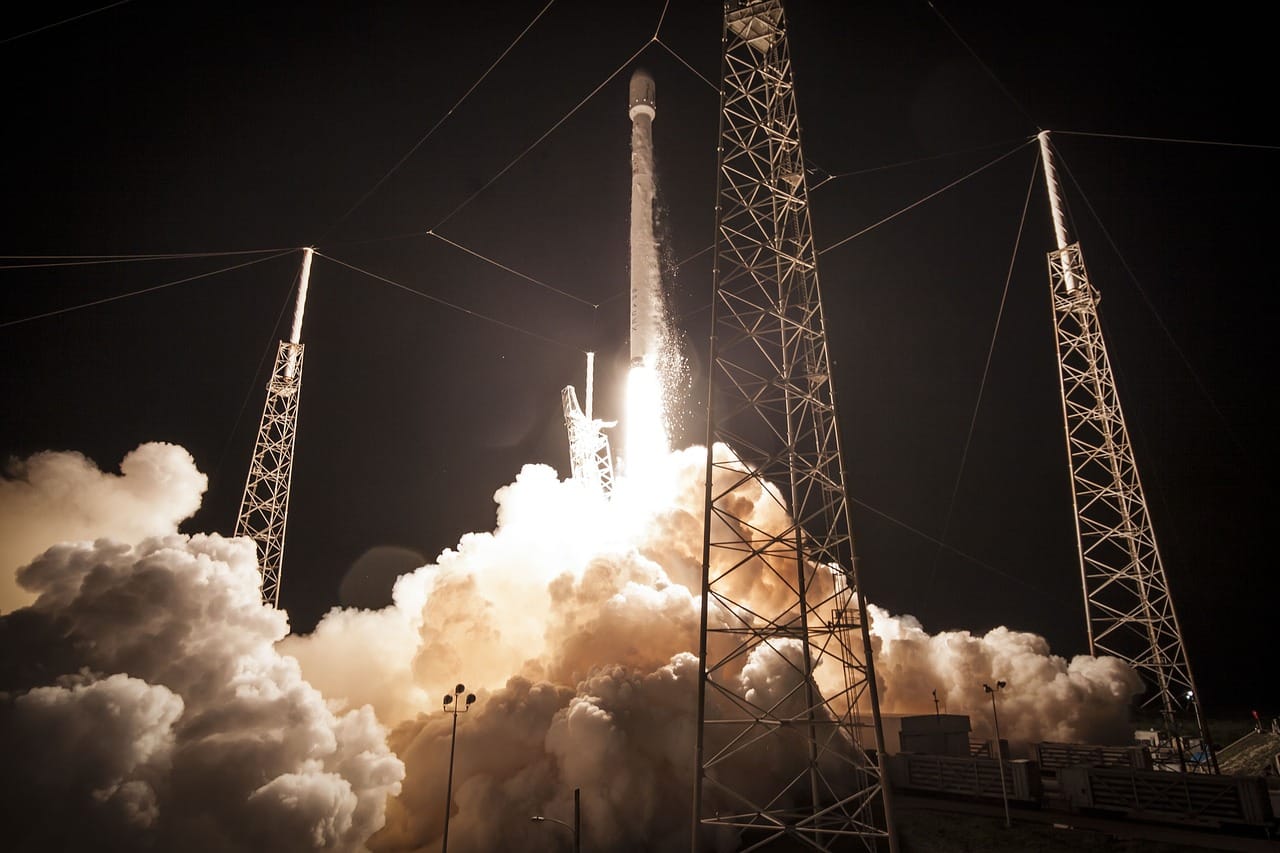
In a recent incident that raised significant safety concerns, flights at several Florida airports were temporarily halted due to debris from SpaceX’s Starship. The rocket, which had launched into space, experienced a failure shortly after takeoff, sparking a brief shutdown of airport operations in Orlando and Miami.
The SpaceX Starship Launch Failure
The incident occurred after SpaceX’s Starship rocket, part of Elon Musk’s ambitious space program, failed during its ascent into space. SpaceX confirmed that the un-crewed spacecraft suffered a “rapid, unscheduled disassembly” during its climb, losing contact with the ground. This launch was the eighth test of the Starship program and marked the second consecutive failure in the series. Despite the failure, no injuries or damage were reported from the incident.
The rocket was supposed to complete a one-hour flight, re-entering Earth’s orbit over the Indian Ocean. However, it lost control and broke apart shortly after launching over the Atlantic Ocean, causing debris to fall in various locations. As a result, aviation authorities implemented a temporary ground stop on flights in and out of major Florida airports, including those in Orlando and Miami, due to the potential risk posed by falling debris.

FAA’s Response and Investigation
In response to the space launch mishap, the Federal Aviation Administration (FAA) issued a statement highlighting the disruption caused by the “space launch incident.” This prompted delays in flights at Florida airports, but the ground stop was lifted soon after.
SpaceX, in coordination with safety officials, quickly enacted its pre-planned contingency responses to ensure public safety. Despite the setback, the company emphasized that it would carefully review the data from the failed mission to better understand the root causes of the accident. SpaceX has declared that today’s flight will provide valuable lessons which will improve Starship’s reliability levels.
SpaceX’s Plans for the Future
SpaceX’s Starship, which is the largest and most powerful rocket ever built, is key to Musk’s long-term vision for space exploration. The Starship spacecraft, along with its Super Heavy booster, is designed to be fully reusable, a feature that SpaceX believes will significantly lower the cost of space travel.
This particular test flight was a significant milestone for SpaceX, but the failure is not expected to halt progress. Musk’s goal for Starship is to ultimately make interplanetary travel a reality, with plans for long-haul trips to Mars. NASA also plans to use a modified version of the Starship spacecraft as part of its Artemis missions to return humans to the Moon.
Previous Failures and Lessons Learned
This incident is not the first time SpaceX has faced setbacks in the Starship program. A similar issue occurred in January, when the Starship rocket failed minutes after launch from SpaceX’s Texas facility. Following that failure, the FAA had briefly closed airports due to falling debris. Additionally, the previous failed launch resulted in property damage in the Turks and Caicos Islands, a setback that led the FAA to ground further Starship launches for review.
Puerto Rico has challenged SpaceX yet the company continues to maintain its mission focus. Dan Huot, SpaceX’s flight commentator, reassured reporters by saying, “Unfortunately, this happened last time too, so we have some practice at this now.” SpaceX continues to push forward, using these failures as learning opportunities to enhance the design and reliability of the Starship rocket.